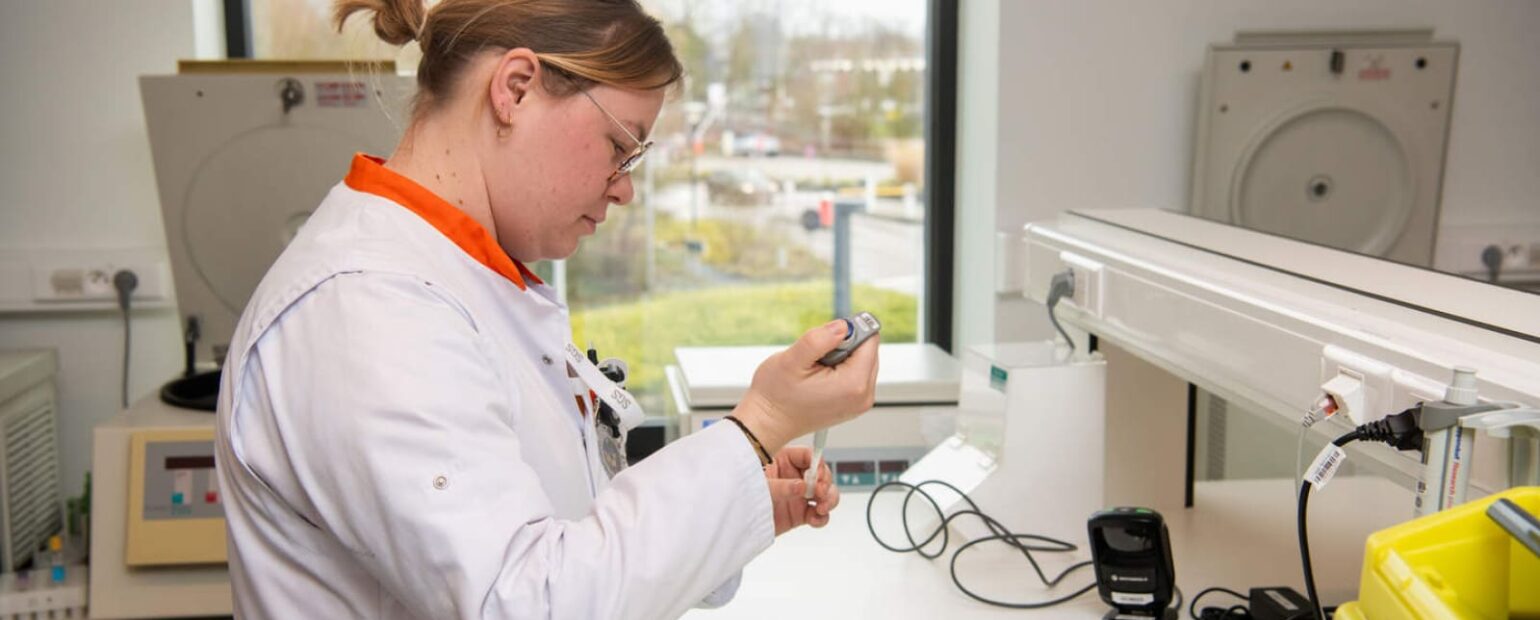
At its research centre in Edegem, SGS has developed an RSV virus that can be used to test vaccines and medicines. It is a first for Antwerp and the first RSV challenge agent developed in this way. On Monday, the virus will be administered to healthy volunteers for the second time.
Kris Vanmarsenille
Edegem
19 February 2026
RSV (respiratory syncytial virus) causes respiratory tract infections and can be extremely dangerous for young children and vulnerable older people. The virus developed by SGS is known as a ‘challenge agent’: a virus specifically designed to infect healthy volunteers and cause mild symptoms. Pharmaceutical companies can then use these volunteers to test their vaccines or medicines.
“Developing a medicine or vaccine takes a great deal of time and money,” explains Wim Verreth, Director of the Clinical Pharmacology Unit in Edegem. “Once a company has developed a medicine, it needs to test it in large groups of people who have to contract the virus naturally—the virus the medicine or vaccine is intended to target. You may need 10,000 people to end up with just a few dozen infected participants in the best-case scenario. These are very expensive and cumbersome trials. A challenge agent can significantly speed up that process.”
Genetic code
SGS isolated the RSV virus from an infected person and mapped its genetic code. At the test unit, volunteers are infected with the virus through the nose.
“The development of our agent took almost four years, because that process is also subject to a range of stringent regulations. But in the end, we were able to develop an agent that does what it is supposed to do,” says Verreth.
“In the first phase of testing, all participants developed symptoms. And we were able to confirm that these symptoms were caused by RSV. This was demonstrated by the nasal swabs we collected. On Monday, we will start a new trial involving twelve people, in order to gather even more information about the course of the symptoms and the contagiousness of the virus.”
Pharmaceutical companies developing an RSV vaccine or a medicine to treat its symptoms can make use of the virus and testing facilities at SGS. All such medicines will still have to be tested in larger groups of people at a later stage; that requirement remains unchanged.
“But,” says Verreth, “by using a challenge agent, pharmaceutical companies can find out much more quickly where they stand. If the medicine or vaccine works in our test unit, they can be reasonably confident that they are on the right track. If it does not, they can stop the expensive development process. That is very important for pharmaceutical companies: they want to know as quickly as possible whether a product has potential or whether they are heading in the wrong direction. This can save them a great deal of time and money.”
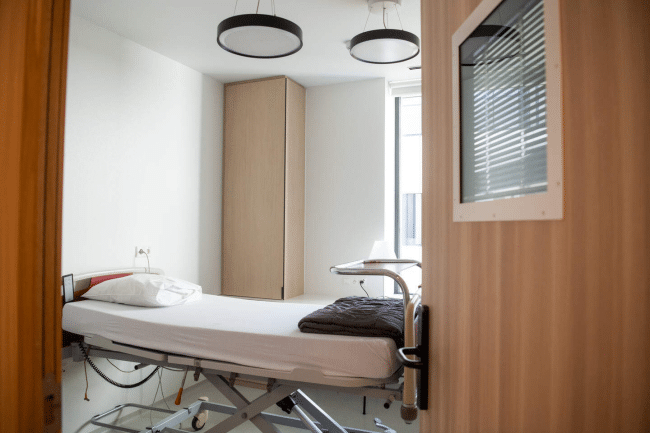
An individual room where the twelve healthy volunteers will stay from Monday onwards. © Jan Van der Perre
SGS has two units with 30 and 16 individual rooms respectively, where challenge-agent studies can be conducted. From Monday, the second group of participants in the RSV study will stay in the 16-room test unit. The unit also has a communal area and a laboratory. The twelve volunteers will stay there for eleven days. Haiko Pillu, Director of Operations at the Clinical Pharmacology Unit, shows us around.
Airlock
The unit is sealed off by an airlock. Nurses and laboratory staff leave their protective clothing and equipment there when they exit the unit. Only one of the airlock doors can be open at any given time.
A slight negative air pressure is maintained inside the unit, so that when a door is opened, air is drawn into the unit rather than escaping from it. This ensures that the virus remains inside the unit.
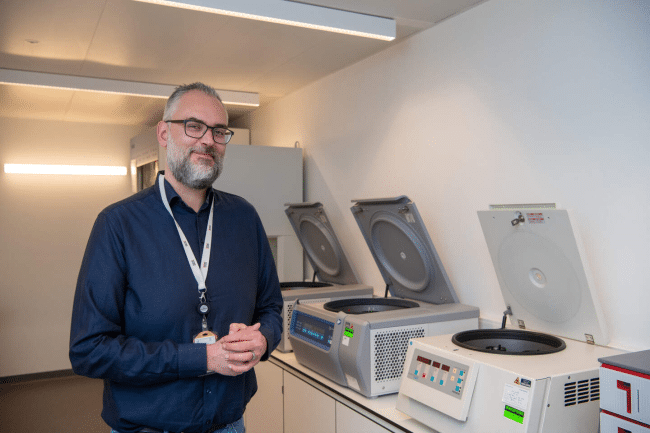
Director of Operations at the Clinical Pharmacology Unit Haiko Pillu shows us around the test unit. © Jan Van der Perre
The rooms look like small hospital rooms, each with its own bathroom. The windows cannot be opened. There is a small window in the door with a screen in front of it, which the participants cannot operate themselves. They should therefore expect nurses to look through the window from time to time. Participants must also wear a face mask throughout the unit, except when they are in their own room.
SGS is equipped to conduct these challenge-agent studies, but it also has a much larger facility with 64 beds, where a wide range of potential medicines can be tested. The rooms accommodate between two and eight people.
“These larger rooms are designed to allow us to monitor participants efficiently. They may not have an individual room in this unit, but they do have more opportunities to relax,” says Pillu.
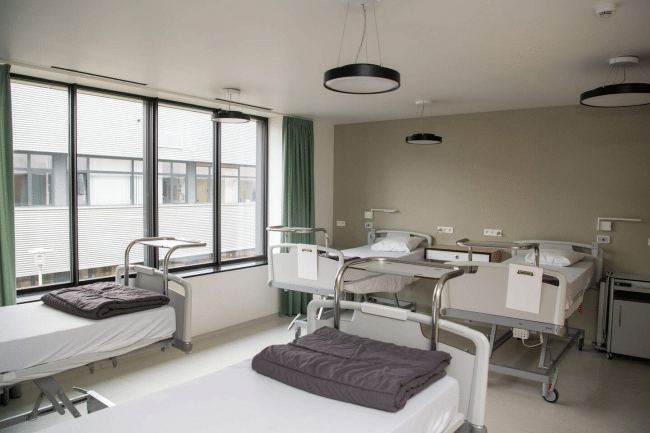
The larger rooms are designed to allow test participants to be monitored efficiently, says Haiko Pillu. © Jan Van der Perre
Tensions and friendships
Some trial periods last up to 30 days, during which participants are monitored regularly. Depending on the nature of the study, they are usually allowed to go outside onto the terrace, or even occasionally leave the facility.
“Sometimes tensions arise within groups, but friendships have also developed here,” says Pillu. “For one study, we once had a group of post-menopausal women. They continued to see each other afterwards. They became genuine friends.”
The database of ikbenpionier.be contains 10,000 people who are willing to participate in clinical studies.
“We need different types of people for our various studies: older people, younger people, women, men, and so on. They also have to meet a range of eligibility criteria. Before participants in the RSV study enter the unit, everyone undergoes thorough screening. For example, they all undergo a PCR test. We need to be absolutely certain that no one is carrying another virus,” says Pillu.
SGS in Antwerp and around the world
SGS specialises in the testing, inspection and certification of a wide range of products. The company operates 2,500 laboratories and business facilities in 115 countries and employs more than 100,000 people worldwide.
The SGS Clinical Pharmacology Unit was initially located at the Stuivenberg site. In 2021, SGS moved into its new facilities in Edegem, which were built in collaboration with Antwerp University Hospital (UZA). The two organisations work closely together.
Facilities in Antwerp
- 64-bed unit: rooms accommodating 2 to 8 people, shared sanitary facilities with separate showers, dining and relaxation area with terrace.
- 30-bed unit: individual rooms with private bathrooms, dining and relaxation area with several skylights.
- 16-bed unit: individual rooms with private bathrooms, dining and relaxation area with a rooftop terrace.
A total of 110 people work at the Edegem facilities.
Antwerp is one of Europe’s largest hubs for vaccine and medicine trials
With SGS’s extensive testing facilities located just a stone’s throw from the academic research centre Vaccinopolis, Antwerp is one of Europe’s largest hubs for vaccine and medicine testing. The two sites in Edegem are now looking to strengthen their collaboration.
They have already worked together. SGS previously developed a challenge agent for an influenza virus, which was used in a large study at Vaccinopolis.
“We purchased a licence for the virus from SGS and subsequently administered it to test participants,” says Pierre Van Damme, Head of Vaccinopolis. “We monitored these people very closely. We wanted to understand exactly how the influenza virus spreads and how long people remain infectious.
“We now have 2,900 samples of blood, saliva, nasal fluid and other materials that were collected from different people at different stages of the process. We are currently analysing these samples. It is an incredibly valuable source of information.”
Vaccinopolis is an academic research centre that also has 30 beds for volunteer participants.
“This means that we can conduct studies for large international organisations such as the WHO,” says Van Damme. “They primarily work for commercial partners. We do that as well, but to a much lesser extent.”
Database of test participants
Another difference between the two centres is the type of research they can conduct.
“Viruses with pandemic potential, such as COVID-19, may only be produced and used in test units that meet specific requirements. We can conduct research into COVID-19 vaccines; SGS cannot,” explains Van Damme.
Pillu adds: “That does not mean that our units are less safe. The requirements for the design and structure of the units are simply different. At Vaccinopolis, for example, every individual room has its own airlock, whereas we have one airlock for the entire unit.”
The two centres have recently started exploring opportunities for closer collaboration. They have already held an initial meeting.
“We have discussed setting up a joint database of potential study participants,” says Van Damme. “We could also represent each other at conferences. This would help us raise awareness of the opportunities available in Antwerp as a clinical research hub among a wider audience.”
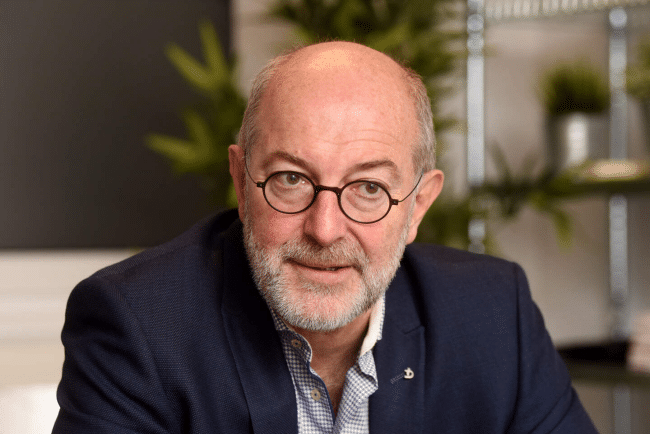
Professor Pierre Van Damme. © Jan Van der Perre
Read the original news item here (in Dutch): https://www.made-in.be/antwerpen/sgs-test-in-onderzoekscentrum-in-antwerpen-zijn-eerste-zelf-gemaakte-rsv-op-gezonde-vrijwilligers/
